Skopje
Properties for sale and rent, plus guides about living in Skopje. 5 listings live.
Overview
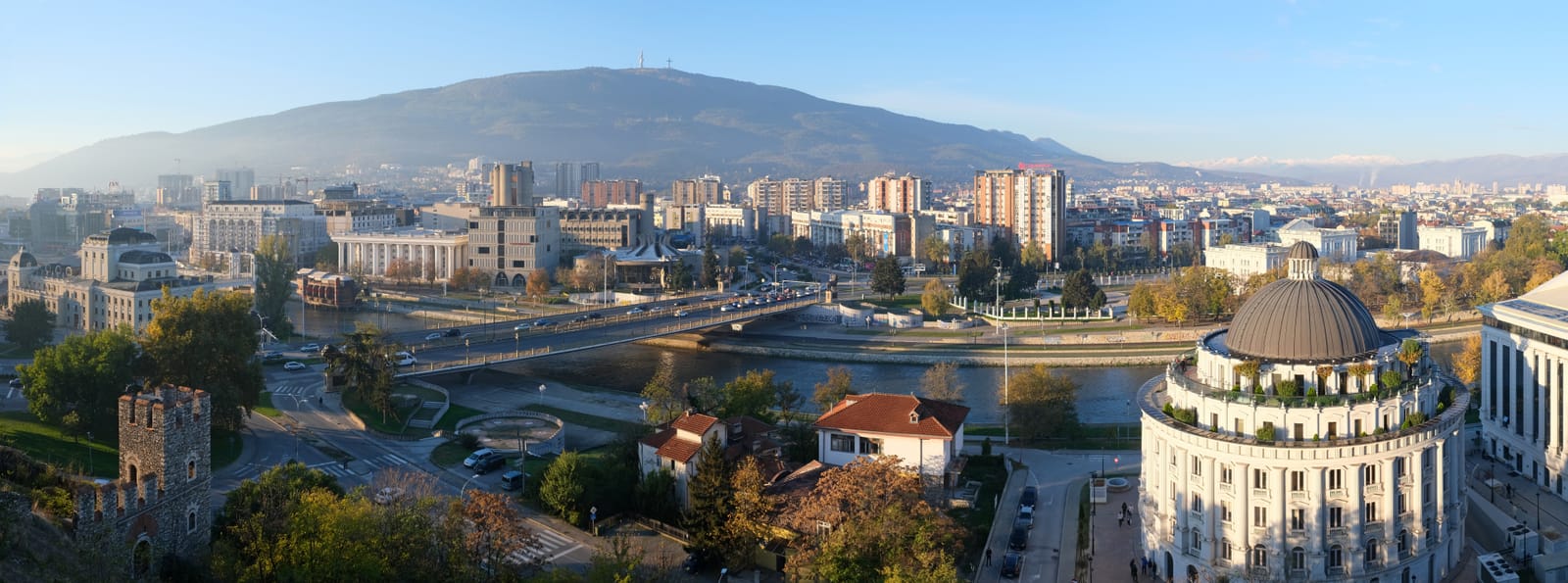
Skopje is the capital and largest city of North Macedonia, set in a broad basin where the Vardar river is joined by the Treska and the Lepenec. The city sits roughly in the centre-north of the country, ringed by the slopes of Vodno to the south and the Skopska Crna Gora to the north, and it has long been the meeting point of the routes running north to south and east to west across the central Balkans.
As the seat of national government, the main universities and most large employers, Skopje is the administrative, commercial and cultural hub of the country. It is the place most arrivals see first, with the international airport a short drive to the south-east, and it functions as the natural base for anyone working across North Macedonia rather than in a single town. By some distance it is the largest population centre in the country, which is reflected in the breadth of services, schools and employment concentrated here.
The area and neighbourhoods
The Vardar splits the city in two and gives Skopje much of its character. On the north bank lies the Čaršija, the old Ottoman bazaar, one of the largest surviving in the Balkans and still a working quarter of craftsmen, cafés, mosques and the covered Bezisten. Above it stands the Kale fortress, and the Stone Bridge connects the bazaar to the central square on the south bank. This older side, together with the Bit Pazar market, remains the historic heart of the city.
The central square and the streets around it were heavily reshaped by the "Skopje 2014" programme, which added neoclassical facades, statues and museums to a centre previously known for the modernist architecture rebuilt after the 1963 earthquake. Buildings such as the main post office and the old railway station are well-known examples of that post-earthquake era, and the contrast between the brutalist and the more recent neoclassical styles is one of the things visitors notice most.
Beyond the centre, residential life spreads across a number of municipalities and neighbourhoods. Centar covers the core; Karpoš and Aerodrom are large residential districts of apartment blocks and amenities; Debar Maalo is a popular older quarter known for its restaurants; and greener, lower-density areas climb the lower slopes of Vodno or sit out towards the suburbs. Just west of the city, the Matka canyon on the Treska offers lakes, monasteries and walking within easy reach of the centre.
Property market
Skopje has the widest range of property and the most active market in the country, simply because it is the largest city and the focus of most employment. Stock runs from city-centre flats and post-war apartment blocks through newer apartment developments on the edges of the centre, to family houses in the suburbs and on the lower hillsides. New-build apartments are a significant part of what is available, alongside older resale flats that vary a good deal in condition.
Demand is broad: local buyers and renters, people relocating from other parts of the country for work, and members of the diaspora buying a base to return to. As in any capital, location matters — proximity to the centre, to the river-side districts and to the better-known neighbourhoods tends to be reflected in price, while outlying districts and properties needing renovation are generally more affordable. Buyers should expect condition and finish to vary widely between similar-looking blocks, so viewing in person and checking paperwork carefully is worthwhile.
Lifestyle and getting around
Day-to-day life in Skopje is that of a small capital. The café and restaurant scene is a central part of local routine, concentrated around the square, Debar Maalo and the bazaar, and the city has the country's main theatres, galleries and concert venues. The riverside, the City Park and the cable car up Vodno to the Millennium Cross are the usual places people head for in their free time, and Matka canyon is close enough for an afternoon trip.
The city is compact enough that much of the centre is walkable, and an extensive bus network covers the wider area. Road connections radiate out to Tetovo and the west, to Ohrid and the south, and towards the Greek and Serbian borders, while the airport gives direct access to a number of European cities. For buyers, Skopje offers the practical advantages of a capital — services, schools, healthcare and transport links in one place — combined with quick access to the mountains and countryside that surround it.
It is also worth remembering that Skopje sits in a seismically active basin: the modern city was substantially rebuilt after the 1963 earthquake, and construction standards and the age of a building are sensible things to ask about. Air quality in winter, when the basin can trap pollution, is another practical consideration that some residents factor into where they choose to live. None of this is unusual for a city of its kind, but both are part of an honest picture of daily life in the capital.


