Prilep
Properties for sale and rent, plus guides about living in Prilep. No live listings yet.
Overview
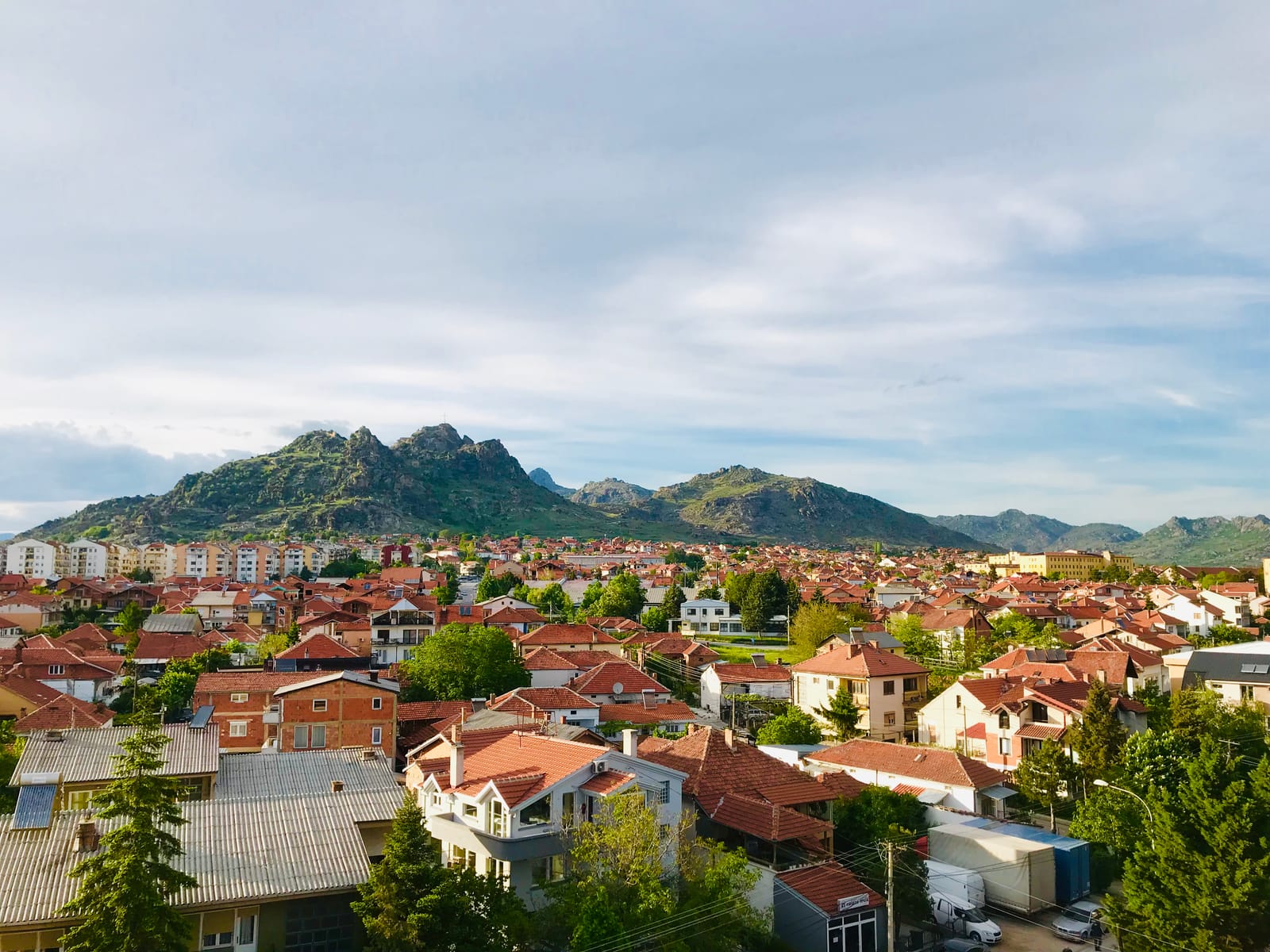
Prilep is a city in the southern part of North Macedonia, set in the northern reaches of the Pelagonia plain, the wide agricultural lowland it shares with Bitola further south. It sits beneath a striking ridge of granite outcrops topped by medieval fortifications, and it is widely known as "the town under Marko's Towers" after those ruins. Prilep is a regional centre for its part of Pelagonia and a working industrial and agricultural town.
The city is particularly associated with two things: tobacco and marble. Pelagonia around Prilep is a long-established tobacco-growing area, and the city has been a centre of the tobacco trade and industry; the surrounding hills are also quarried for white marble, known as Sivec, which is used in building and sculpture. Together, farming, tobacco and stone have shaped the city's economy and give it a distinctive working character.
The area and neighbourhoods
The centre of Prilep has the square, pedestrian streets, market and clock tower of a regional city, with an old bazaar quarter and the civic buildings that mark its standing. Around the centre the city spreads into residential districts, and out beyond them into the flat farmland of Pelagonia, much of it given over to tobacco and other crops. The plain is broad and open, with the mountains that ring Pelagonia visible in the distance.
Rising directly above the town is the ridge of Marko's Towers, or Markovi Kuli, a dramatic landscape of weathered granite boulders topped by the remains of a medieval fortress associated with the historical figure of King Marko. The site is both an archaeological landmark and a place to walk, with wide views over the plain. A little to the north, set high on a rocky mountain, stands the monastery of Treskavec, reached by a climb and known for its setting above Pelagonia.
The combination of the city on the plain and these sites in the hills above gives Prilep its particular feel. The granite outcrops are visible from much of the town and are part of its identity, while the surrounding farmland anchors it as an agricultural centre. It is a settled, working place rather than a tourist town, with the rhythms of a regional hub and a long history reflected in its monuments and its old quarter.
Property market
Property in Prilep ranges from apartments in the centre and the surrounding blocks to older townhouses in the historic streets and family houses in the residential districts and nearby villages, along with land out on the Pelagonia plain. As a regional industrial and agricultural city, it offers a spread of stock grounded in local and regional demand rather than in tourism, with older buildings varying considerably in condition.
Demand is driven mainly by people living and working in the city and the surrounding area, supported by its tobacco, marble and other industries and its role as a centre for northern Pelagonia. Prices and choice reflect that steadier, locally based market. Buyers should look closely at the condition of older properties, confirm title and boundaries as a matter of course, and weigh the trade-off between a central apartment or period townhouse and a more straightforward house in the residential districts or a plot on the plain.
Lifestyle and getting around
Everyday life in Prilep centres on the square, the bazaar, the market and the cafés, in the manner of a regional town, with the surrounding plain and the hills above providing the outdoors close at hand. Marko's Towers is the obvious destination for a walk, both for the rock landscape and the fortress ruins and for the views, while Treskavec monastery offers a longer climb to a remarkable setting. The city has the cultural events and institutions of a centre of its size.
Prilep is connected by road across the Pelagonia plain to Bitola to the south and towards the centre of the country to the north, and it has rail links as part of the line serving this part of Macedonia. The centre is largely flat and walkable, suited to its market-and-café rhythm. For buyers, the appeal is a working regional city with a strong identity — tobacco, marble and the granite towers above it — set on a broad agricultural plain, with good road connections and a settled, unhurried pace.
Like the other towns of the south, Prilep is a slower-paced place than the capital, and that is much of its character: a city built around the plain, the seasons and its long-standing industries rather than around visitors. Buyers drawn to it tend to value that steadiness and the dramatic setting beneath Marko's Towers, and to accept in return that the market, services and pace are those of a regional centre rather than a major city.