Kumanovo
Properties for sale and rent, plus guides about living in Kumanovo. 1 listing live.
Overview
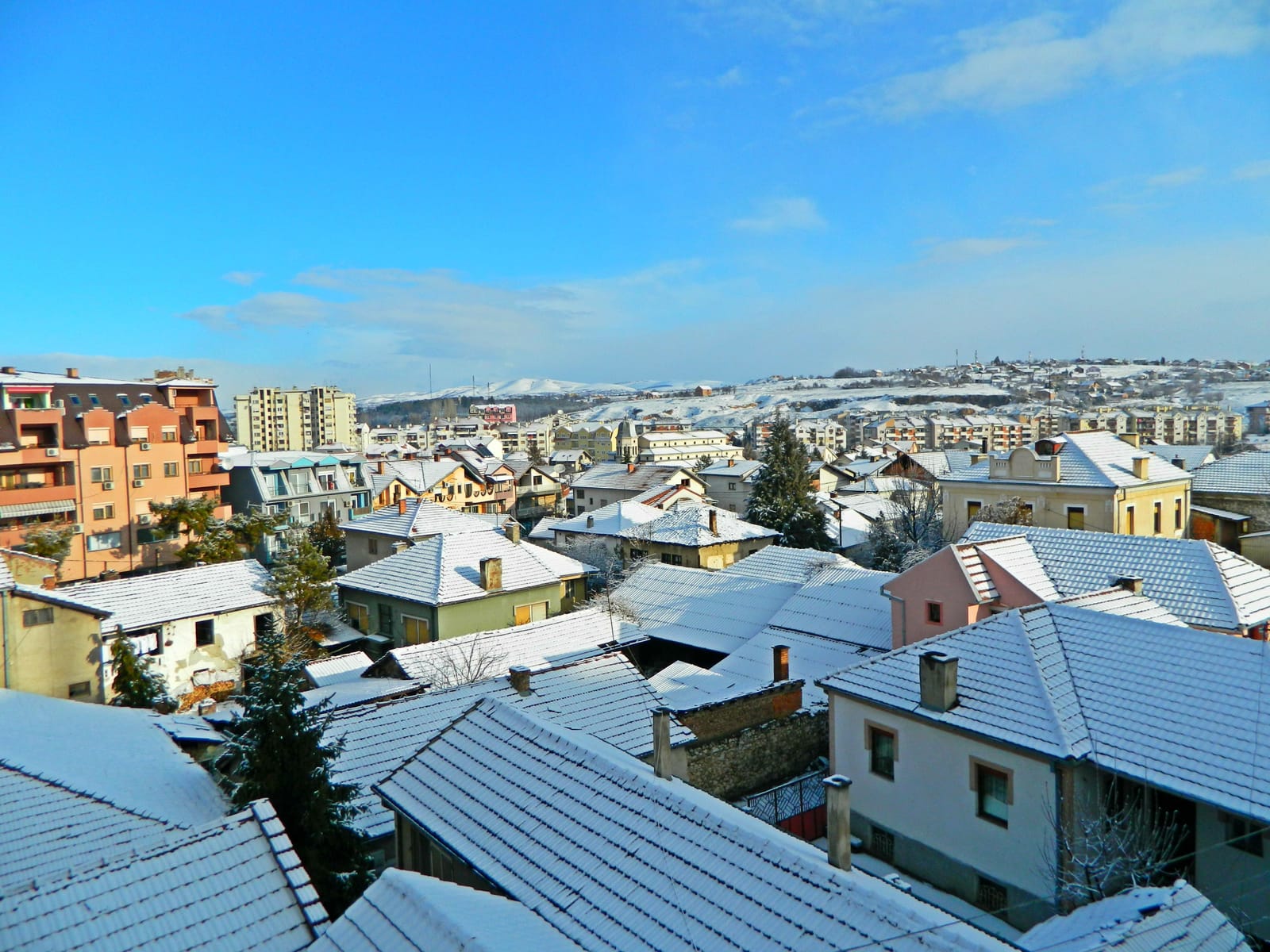
Kumanovo is the largest city in the north-east of North Macedonia, set in a plain not far from the borders with Serbia and Kosovo. It lies a relatively short distance north-east of Skopje, on the routes that run north towards Serbia, and it serves as the main urban and commercial centre for its part of the country. The surrounding area is a mix of lowland and the hills that rise towards the borders.
Kumanovo is, in character, a working town: a regional centre with an industrial and commercial base rather than a tourism destination. It is closely associated with the nearby Kokino site, a Bronze Age sanctuary in the hills to the north sometimes described as a megalithic or prehistoric observatory, which is one of the best-known archaeological places in the region. That mix of an everyday working city and notable sites in its hinterland is typical of the north-east.
The area and neighbourhoods
The centre of Kumanovo is the usual focus of a regional city, with a main square, shopping streets, markets, cafés and the civic and religious buildings that mark a town of its standing. Around the centre the city spreads into residential districts of houses and apartment blocks, and out beyond them into the plain and the villages of the surrounding municipality, which is one of the larger ones in the country by area.
To the north, the land rises towards the hills and the Serbian border, and it is there, near the village of Staro Nagoričane, that the Kokino site sits on a hilltop with wide views over the surrounding country. The medieval church at Staro Nagoričane is another notable monument in the same area. The wider district takes in farmland, villages and these scattered historic sites, giving Kumanovo a hinterland of real interest even though the city itself is primarily a working centre.
Kumanovo's position close to where North Macedonia, Serbia and Kosovo meet has long made it a crossroads, and the routes north towards the borders pass through or near the city. That location, together with its size, is part of why it developed as the main town of the north-east, with the industry, services and institutions that role brings. It is a place defined more by its function as a regional hub than by any single landmark within the city.
Property market
Property in Kumanovo runs from apartments in the centre and the surrounding blocks — including older stock and some newer construction — to family houses in the residential districts and the villages of the plain. As a sizeable regional city there is a reasonable spread of choice, and prices and availability reflect a market grounded in local and regional demand rather than in tourism or holiday-home buyers.
Demand comes mainly from people living and working in the city and the surrounding area, with the city's industrial and commercial base and its role as the centre of the north-east underpinning the market. Its proximity to Skopje means some residents look to Kumanovo for more affordable housing within reach of the capital. As anywhere, buyers should check the condition and legal status of both older and newer buildings, confirm title and boundaries, and weigh a central apartment against a house in the quieter districts or villages.
Lifestyle and getting around
Daily life in Kumanovo is that of a regional working city: the square, the markets, the shops and the cafés are the focus, and the surrounding plain and hills provide the countryside close at hand. The Kokino site and the medieval churches in the hinterland are the main destinations for those interested in the area's history, and the hills towards the border offer walking and wide views. It is an unpretentious place, geared to the everyday rather than to visitors.
The city is well connected by road and rail, sitting on the routes that run north from Skopje towards the Serbian border, and the capital and its airport are within a relatively short drive. That proximity is one of Kumanovo's practical advantages, giving access to the country's widest range of services while keeping the lower costs and steadier pace of a regional city. For buyers, the appeal is a functioning north-eastern hub with good links to Skopje and the borders, and a hinterland of farmland and notable sites behind it.
Kumanovo will suit buyers looking for a practical, locally grounded base rather than a scenic or tourist-oriented one. Its strengths are its size and services, its road and rail links, and its closeness to both the capital and the northern borders; in return, it is a working town whose market and amenities are those of a regional centre. For anyone whose priorities are connectivity and value within reach of Skopje, that combination is much of the attraction.
