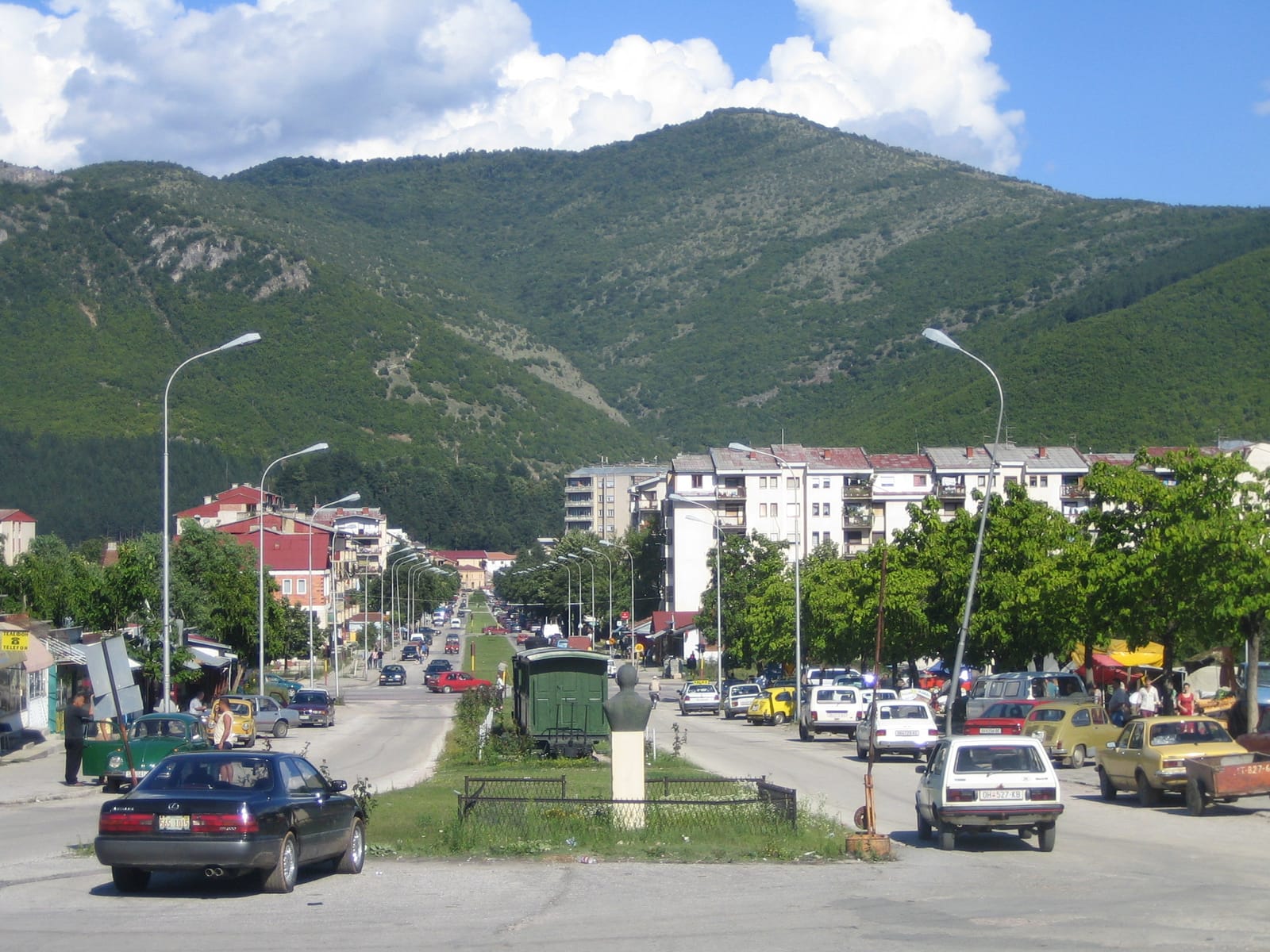
Kičevo
Properties for sale and rent, plus guides about living in Kičevo. No live listings yet.
Overview
Kičevo is a town in the western part of North Macedonia, set in a valley on the south-eastern slopes of Mount Bistra, roughly midway between Ohrid to the south and Gostivar and Tetovo to the north. It sits on the main road linking the centre of the country to Ohrid and the south-west, and that position has long made it an important crossroads. The town serves as a regional centre for its part of the west, in hilly, partly wooded country.
Kičevo has historically depended on forestry and mining alongside its role as a road junction and trading town. The surrounding mountains are wooded, and timber has long been part of the local economy, while a lignite mining and power complex at nearby Oslomej has been a significant employer. The town grew in importance after the building of the Skopje–Kičevo–Ohrid road in the early twentieth century, which strengthened its trade and crafts, and it remains a working town rather than a tourism destination.
The area and neighbourhoods
The centre of Kičevo has the square, shopping streets, market and cafés of a regional town, with the civic and religious buildings that mark its standing and an older quarter reflecting its history as a trading centre. Around the centre the town spreads into residential districts of houses and apartment blocks, and out into the surrounding villages of the valley and the lower slopes of the hills.
The land around Kičevo is hilly and wooded, rising towards Mount Bistra and the ranges that separate the town from Ohrid and the Polog. The valley of the Treska river leads east towards Makedonski Brod, and the roads radiate out in several directions — north towards Gostivar and Tetovo, south to Ohrid and Struga, and south-east towards Demir Hisar and Bitola — underlining the town's role as a junction. The wooded mountains and the river valleys give the wider area its character.
A short distance from the town, set on a wooded mountainside, stands the monastery of Sveta Bogorodica Prečista, a historic foundation dedicated to the Annunciation and one of the notable monuments of the area. The combination of the town in its valley, the surrounding forested hills and this monastery in the mountains gives Kičevo a setting that mixes a working road-town with quiet upland country close at hand. It is a regional centre geared to industry, forestry and everyday life rather than to visitors.
Property market
Property in Kičevo runs from apartments in the centre and the surrounding blocks — older stock alongside some newer construction — to family houses in the residential districts and the villages of the valley, together with plots and land in the surrounding hills. As a regional town grounded in forestry, mining and its role as a road junction rather than tourism, it offers a spread of stock driven by local and regional demand.
Demand is shaped by the town's role as a centre for its part of the west, by employment in mining, forestry and local industry, and, as in much of the region, by links with a diaspora abroad. Prices and choice reflect that locally based market. As anywhere, buyers should check the condition and legal status of both older and newer buildings, confirm title and boundaries, and weigh a central apartment against a house in the quieter districts or a plot in the surrounding hills and villages.
Lifestyle and getting around
Daily life in Kičevo centres on the square, the market, the streets and the cafés, in the manner of a regional town, with the surrounding wooded hills and river valleys providing the outdoors close at hand. The monastery of Prečista on its mountainside is the obvious destination in the area, and the forests and uplands around Mount Bistra offer walking and cooler air. It is an unpretentious, working place geared to the everyday rather than to tourism.
Kičevo is well connected by road, sitting on the main route between the centre of the country and Ohrid, with roads also leading north to Gostivar and Tetovo and south-east towards Bitola. That position as a junction is one of its main practical advantages, putting both Ohrid and the towns of the north-west within reach. For buyers, the appeal is a functioning regional town with good road links, an economy grounded in forestry and industry, and quiet wooded country and a historic monastery on its doorstep.
Kičevo will suit buyers looking for a practical, locally grounded and affordable base in the west rather than a scenic or tourist-oriented one, with the convenience of the Ohrid road close by. Its strengths are its position as a crossroads, its working economy and its access to quiet upland country; in return, it is a town whose market and services are those of a regional centre. For anyone drawn to the western interior and good connections towards both Ohrid and the north-west, that combination is much of the attraction.