Bitola
Properties for sale and rent, plus guides about living in Bitola. No live listings yet.
Overview
Bitola is one of the principal cities of North Macedonia and the largest in the south of the country, set in the Pelagonia plain not far from the Greek border at Medžitlija. It lies at the foot of the Baba massif, whose peak Pelister gives its name to the national park on the city's doorstep, and it has long been an important regional centre for the surrounding agricultural plain.
Historically Bitola was a major administrative and diplomatic town in the late Ottoman Balkans, sometimes called the "city of consuls" because so many European states maintained consulates there in the nineteenth century, when it ranked among the most important towns of the wider region. That past is still visible in the architecture of the centre and gives the city a more formal, European character than its size alone would suggest.
The area and neighbourhoods
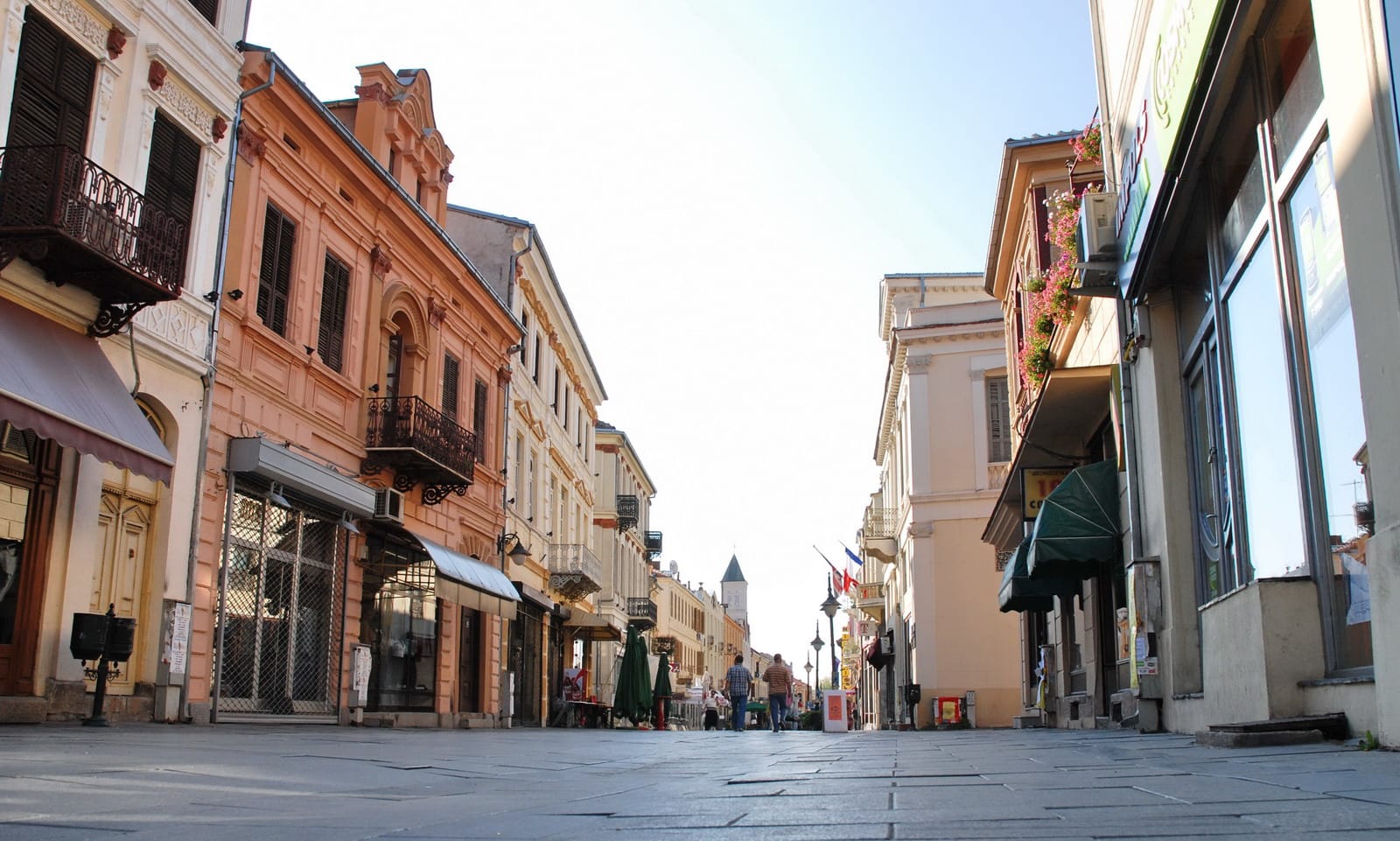
The heart of Bitola is Širok Sokak, the wide pedestrian boulevard lined with pastel nineteenth- and early twentieth-century facades, cafés and former consular buildings, running from the city park towards the old bazaar. The Stara Čaršija, the clock tower and a number of mosques and churches sit at the older end, while the boulevard itself is where much of the city's social life takes place.
On the southern edge of the city lie the ruins of Heraclea Lyncestis, a town founded in the fourth century BC by Philip II of Macedon and later an important Roman station on the Via Egnatia. The site is known for its early Christian basilicas and well-preserved floor mosaics and is one of the most significant archaeological places in the country. Beyond the centre, Bitola spreads into residential districts of houses and apartment blocks, and the land quickly gives way to the farmland of Pelagonia and, to the west, the wooded slopes of Pelister.
Pelagonia, the wide plain that surrounds the city, is one of the country's main agricultural regions, and that farming hinterland has long underpinned Bitola's economy alongside its administrative and educational roles. The result is a city that feels settled and self-contained rather than tourist-facing — a regional capital for its part of the country, with the rhythms of a working provincial centre and a long civic tradition behind it.
Property market
Property in Bitola ranges from apartments in the centre and the surrounding blocks to older townhouses in the historic streets, some of them substantial period buildings, and family houses in the residential districts and nearby villages. The character of the older centre means there are buildings with genuine architectural interest, though period properties can need significant work and may carry conservation considerations.
As a established regional city rather than a tourism resort, Bitola's market is driven mainly by local and regional demand, including students and staff connected to its university and institutions, and by people drawn to the city's café culture and proximity to Pelister. Prices and choice reflect that steadier, locally grounded demand. Buyers should look closely at the condition of older buildings, check title and boundaries as a matter of course, and weigh the trade-off between a central period property and a more straightforward modern home.
Lifestyle and getting around
Bitola is well known within the country for its café culture, and a slow coffee on Širok Sokak is something of a local institution. The boulevard, the bazaar and the city park are the focus of everyday life, and the city has theatres and cultural events with a long tradition, including a film and other festivals. The proximity of Pelister National Park, with its forests, glacial lakes and a small ski area, adds easy access to the outdoors.
The centre is flat and very walkable, which suits its café-and-boulevard rhythm, and local roads and buses serve the wider city and the Pelagonia towns such as Prilep. The nearby border crossing gives a road link towards northern Greece, while routes north connect Bitola to Prilep and on towards the centre of the country. For buyers, Bitola offers the feel of a dignified provincial city — architecture, culture and an unhurried pace — with a national park within reach and the practical services of a regional centre.
It is a slower-paced place than Skopje, and that is much of its appeal: a city where daily life is built around the boulevard, the seasons and the surrounding countryside rather than the pressures of a capital. Buyers drawn to Bitola tend to value that steadiness and the architectural fabric of the centre, and to accept in return that the market and the range of services are those of a regional city rather than a major metropolitan one.